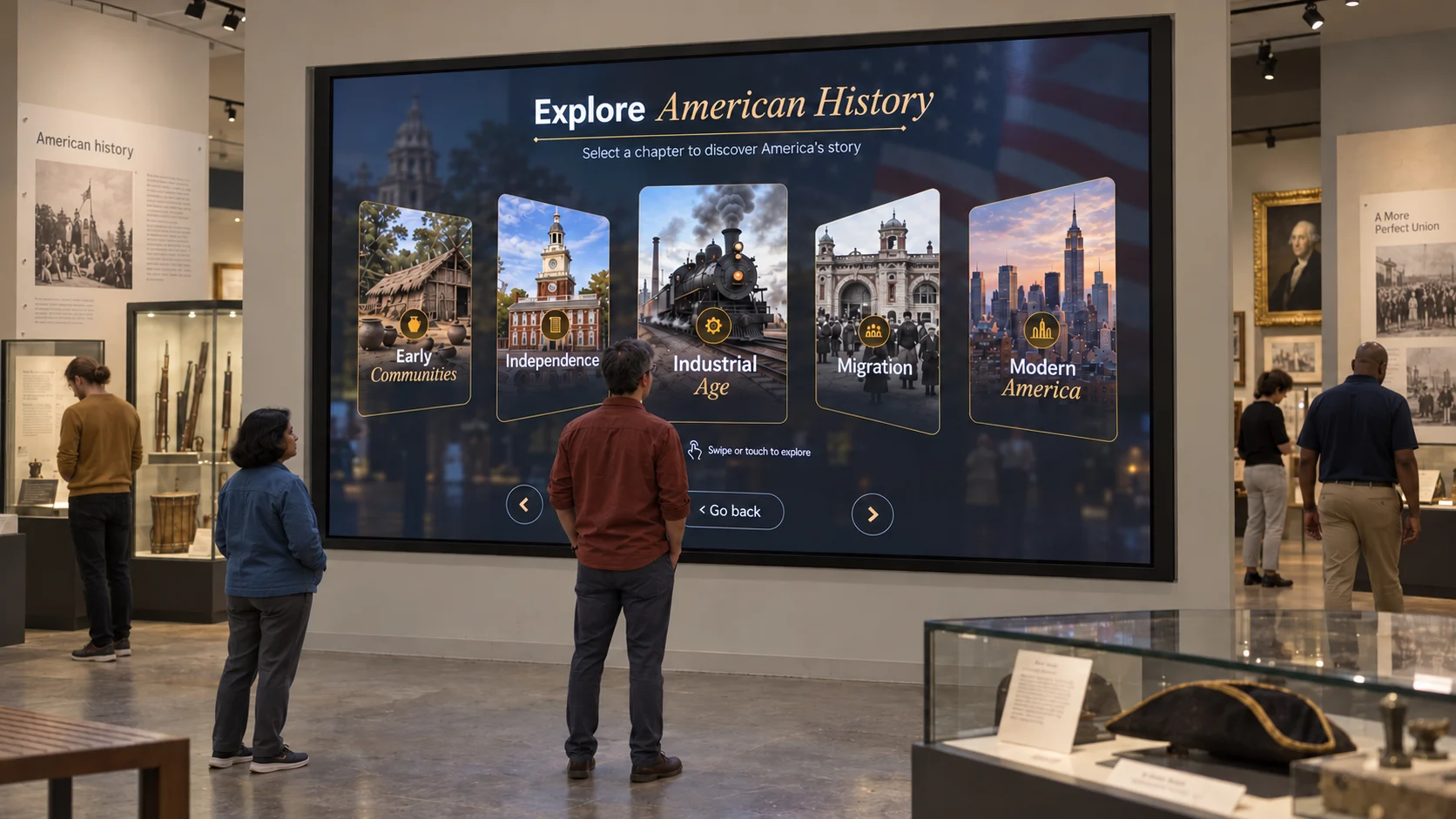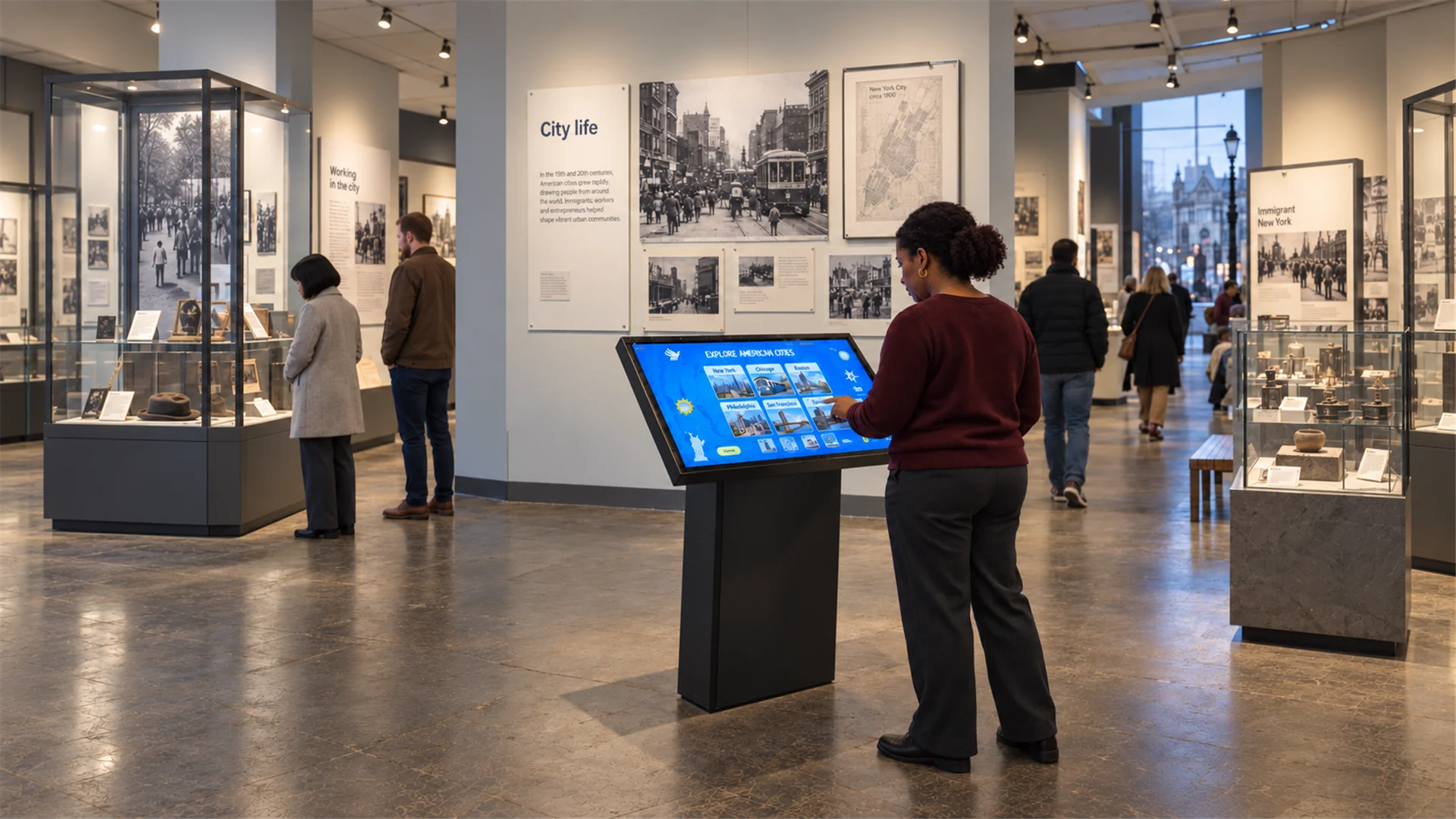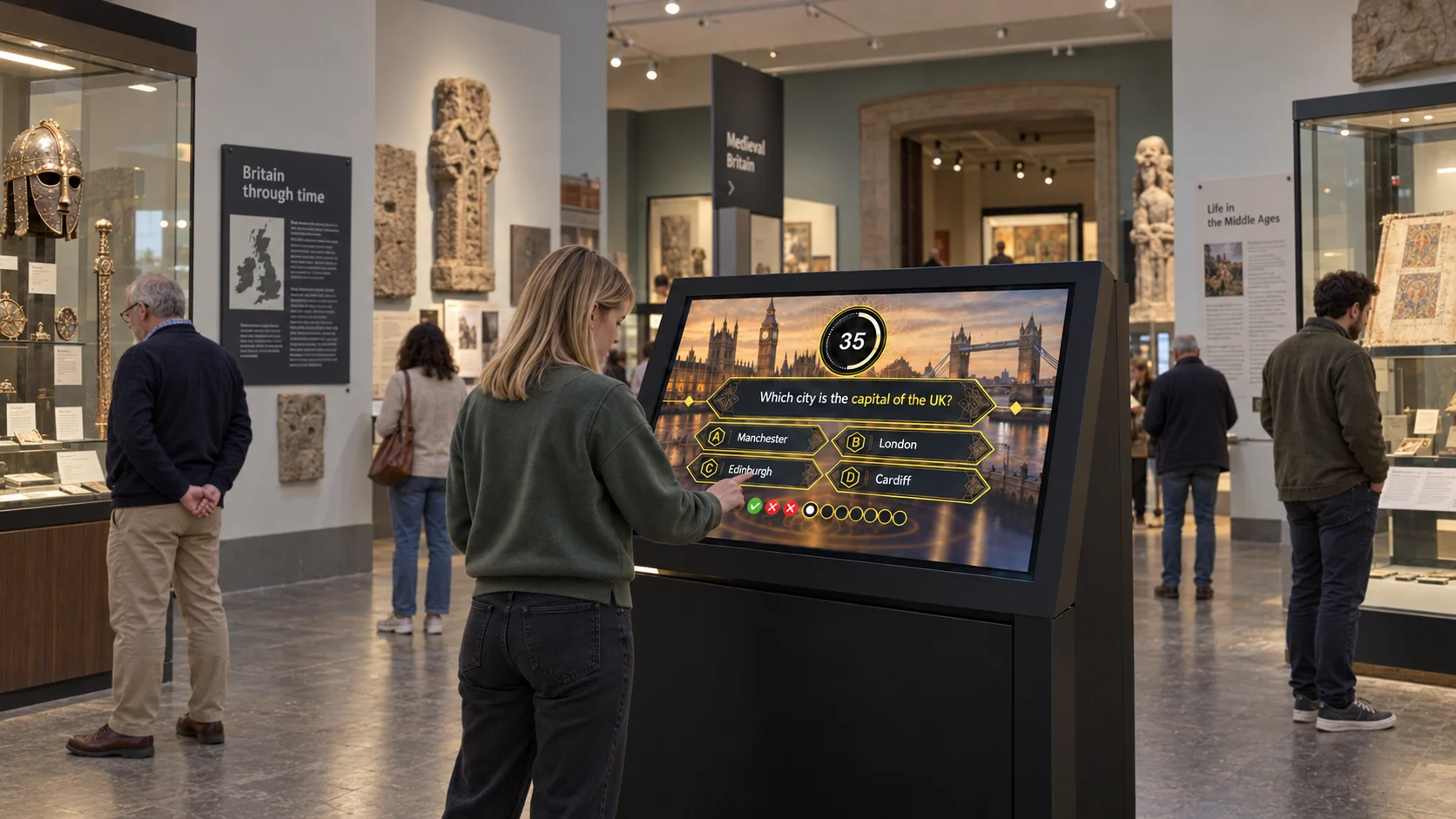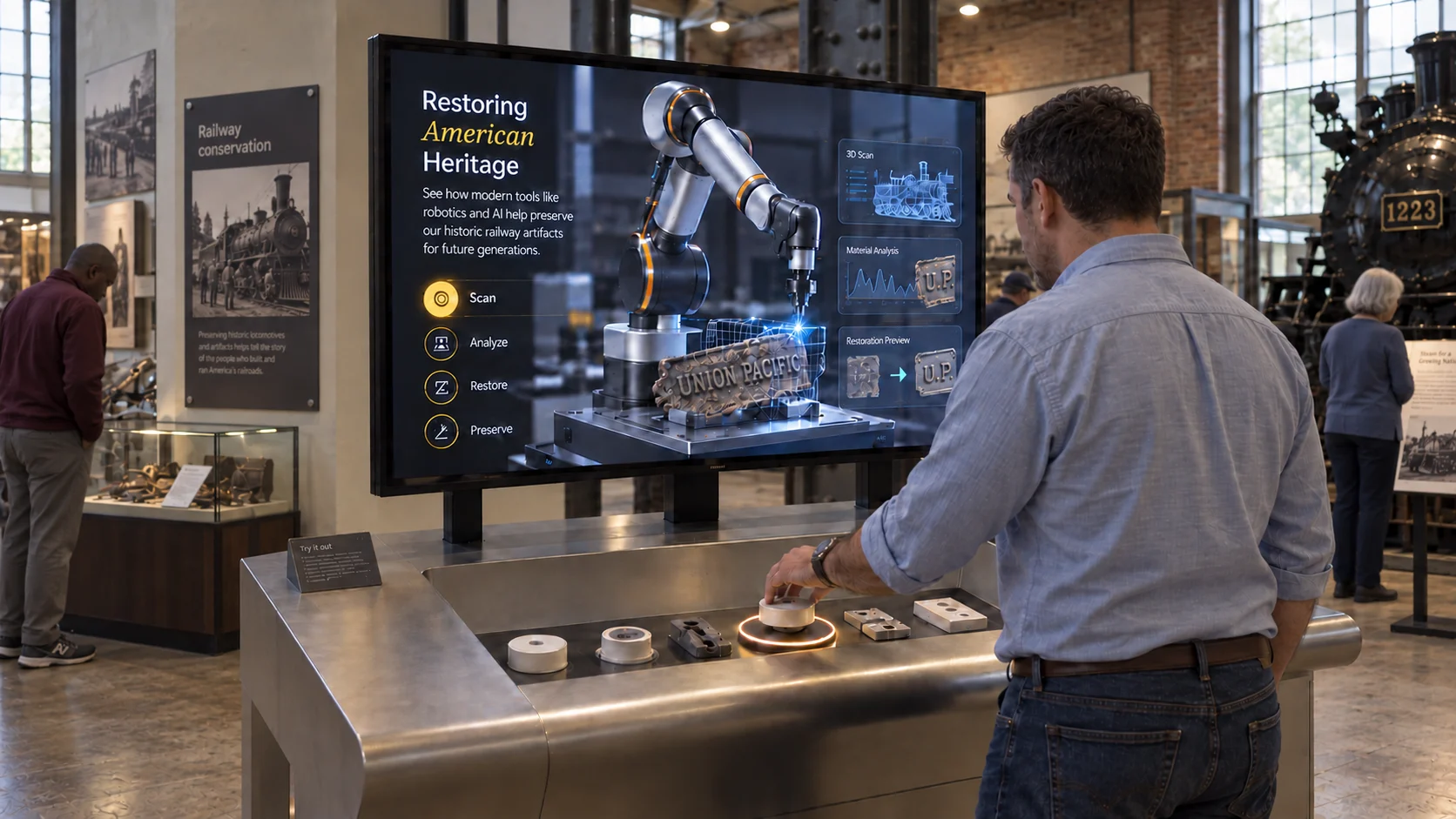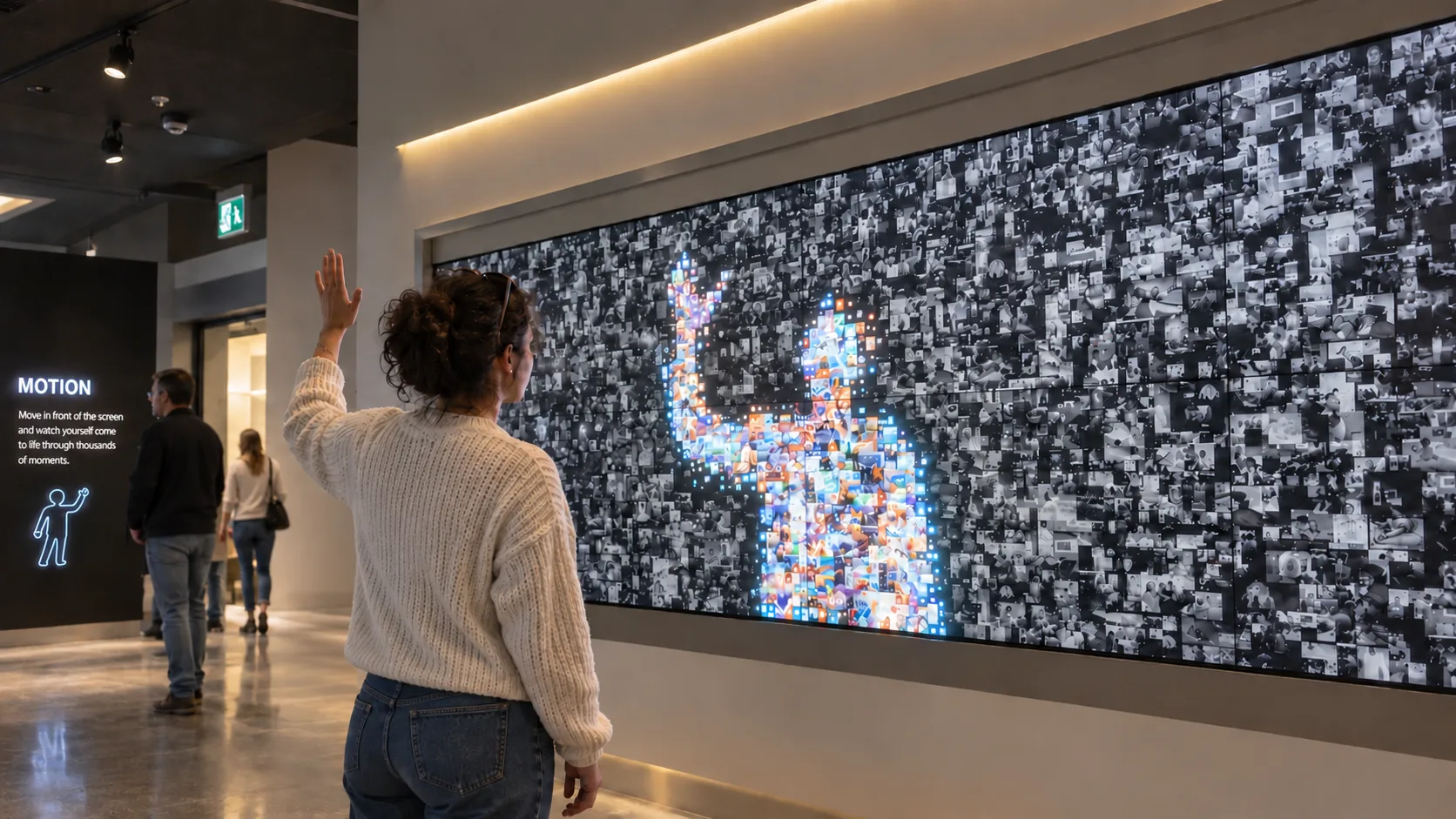
Short answer: build custom when the interaction itself is the concept, when it must integrate deeply with other systems, or when nothing on the market does it. Buy a no-code builder or a ready-made interaction template when the interaction is a known pattern (timeline, quiz, kiosk, RFID object table, gesture wall or photo booth) and the real value is in the content and the moment. Most projects contain both, and the smartest budgets spend custom money only where it creates something visitors will remember.
We've delivered custom interactive projects for over a decade at DJX Labs and its sister studios, and we built WEEV because the same patterns kept being rebuilt from scratch. Here's how we think about the decision.
The hidden cost of rebuilding
On a typical custom interactive, a large share of development effort goes into things visitors never notice:
- Input handling for touch, RFID, sensors and cameras
- An idle/attract state and session reset
- Content loading, multiple languages and layout
- A way for someone non-technical to update content
- Auto-start, crash recovery and offline behaviour
- Logging and analytics
None of this is creative. It's plumbing. When a quiz or timeline is built from zero for every client, the budget pays for plumbing again and again, and every custom build is a new thing to maintain.
Three ways to get an interactive experience
1. Custom development
Unity, Unreal, TouchDesigner, web technologies or native code, built by a studio or in-house developers.
Best when: the interaction is novel, the visuals are generative or bespoke, or the experience must connect tightly to other systems (ticketing, CRM, live data, show control).
Watch for: longer timelines, higher cost, and dependence on the developer for every future change. Ask who maintains it in year three.
2. No-code app builders
Tools like Intuiface and PandaSuite give designers a canvas, components and logic.
Best when: you need a custom interface and data connections but don't want to write code.
Watch for: you're still designing and building an app each time, and advanced inputs (sensors, RFID) may need configuration work.
3. Ready-made interaction templates
Libraries like WEEV Blocks, or Omnitapps' app suite, provide the interaction already built. You add content and branding.
Best when: the interaction is a proven pattern and you need speed, predictability and repeatability, which is typical for agencies running many activations or museums with several similar stations.
Watch for: you work within each template's options. If the brief needs something the template can't do, you're back to custom.
A decision checklist
Score each question for your project:
| Question | Points toward build | Points toward buy |
|---|---|---|
| Is the interaction itself the headline idea? | Yes | No, the content is |
| Does a proven pattern already fit (quiz, timeline, pick & place, gesture wall)? | No | Yes |
| Must it integrate live with other systems? | Yes | No |
| Timeline under 4-6 weeks? | Not applicable | Yes |
| Will it be repeated across venues or clients? | Not applicable | Yes |
| Will non-technical staff update content? | Maybe, with extra build | Yes, CMS included |
| Is it permanent with a long life? | Plan maintenance | Choose a stable licence |
| Is budget tight? | Not applicable | Yes |
If most answers point to buy, spend the saved budget on content, fabrication and a stronger visitor journey.
The hybrid approach most projects need
Real exhibitions rarely need one approach throughout. A typical museum gallery might combine:
- A hero experience that's genuinely unique → custom
- An RFID object table and a timeline → templates
- A quiz near the exit → template
- A visitor feedback station → template
This puts creative budget where it matters and keeps the rest reliable and cheap to maintain.
What this means for agencies and AV integrators
For experiential agencies and AV partners, templates change the economics:
- Faster pitches. Show a working interaction with the client's content in days, not a mock-up.
- Better margins. Less billable time spent on plumbing; more on creative and delivery.
- Lower risk. Proven interactions have fewer surprises on site.
- Repeatability. The same Block can serve many clients with different content and branding.
- Temporary events. WEEV offers one-week, two-week and one-month licence terms that begin when a WEEV file is exported and activated. Add seats for unchanged files deployed in more places; a changed version needs a new licence.
Questions to ask any software or development partner
- Who can update the content after launch, and how?
- Does it run offline? What happens if the internet drops?
- What exactly is the licence: per device, per project, subscription or one-time?
- What hardware is required, and is there a written setup spec?
- What happens after a power cut?
- What analytics are available?
- Who supports it after opening, and at what cost?
- If we part ways, can we keep running what we've paid for?
Frequently asked questions
Is custom interactive software worth the cost? When the interaction is the concept or needs deep integration, yes. For common formats like quizzes, timelines and kiosks, templates usually deliver the same visitor experience for far less.
How long does it take to build a custom interactive exhibit? Custom projects commonly take several weeks to a few months, depending on complexity, content and hardware. Ready-made templates can go live in hours once content and compatible hardware are ready.
Can templates look unique to each client? Yes. Content, branding, colours and visuals change the experience substantially. Two installations built from the same WEEV Block can look completely different.
Can we start with a template and customise later? Yes. A common path is launching with a template, measuring engagement, then commissioning custom features where the data shows it's worth it. DJX Labs scopes custom work beyond the Blocks library.
See what's ready to use: explore the Blocks library, or book a scoping call to plan a hybrid project.